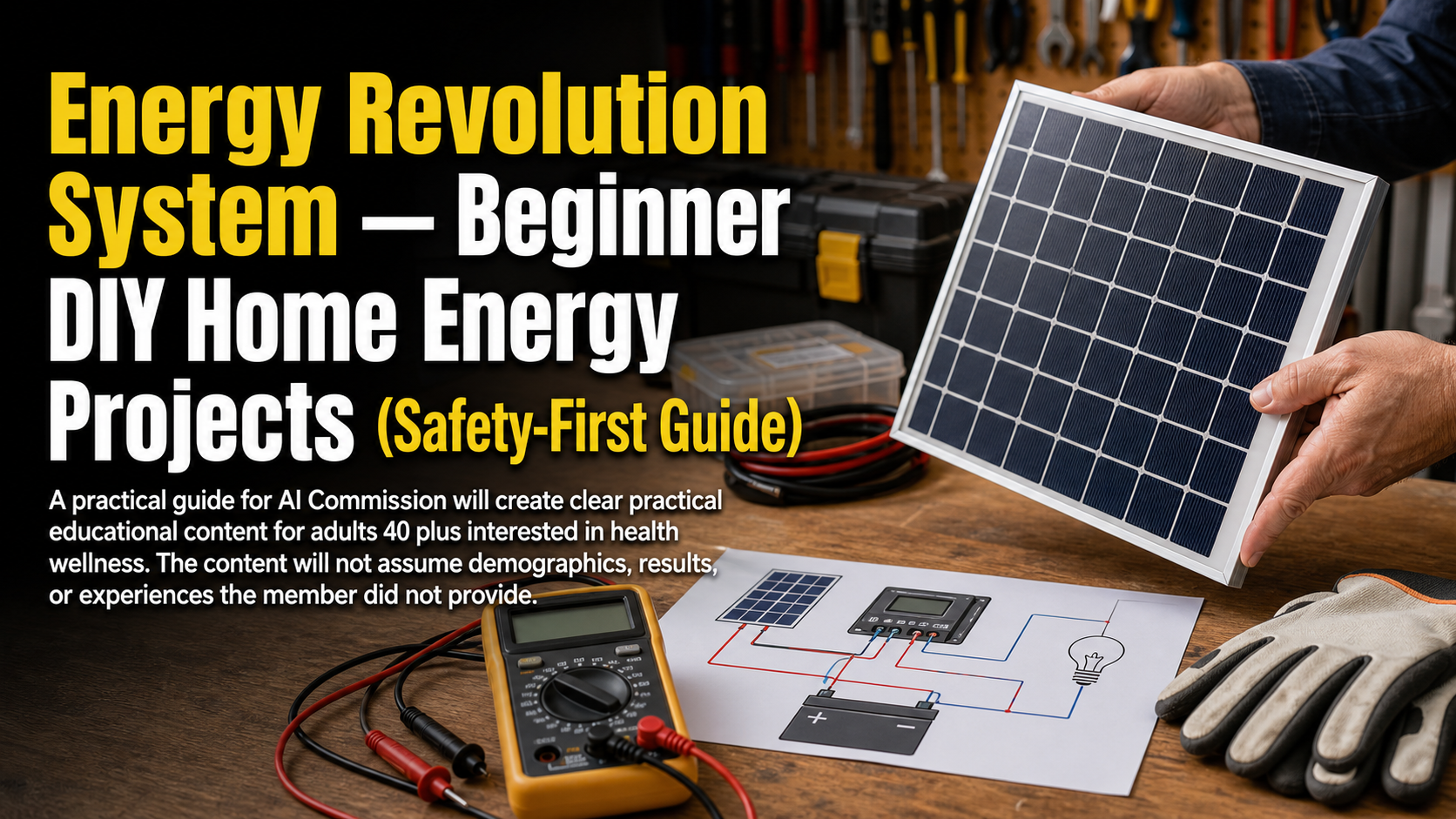
Energy Revolution System — Practical DIY Home Energy Toolkit
If you’re interested in building practical skills around home energy projects, this clear, step‑by‑step guide will help you get started safely and with confidence. The Energy Revolution System is a digital DIY energy‑system resource designed to teach approachable projects and techniques for homeowners who want to learn more about energy options, basic system components, and safe practices. This article outlines a sensible path for adults 40 and over who value hands‑on learning, safety, and steady skill building without hype or unrealistic promises.
Why take a stepwise approach?
Learning by small projects reduces risk and helps you develop the judgement needed for larger work. A progressive approach lets you practice basic skills—measuring, mounting, routing cables, and reading simple wiring diagrams—before attempting anything that might require a licensed electrician. The goal is knowledge and capability, not instant transformation.
Beginner‑friendly project ideas
Lighting upgrades: Switching to efficient LED fixtures and updating switches is an accessible first step. It teaches safe handling of fixtures, basic wiring, and how to read circuit labels. Always turn off the appropriate circuit breaker before starting and verify no current with a tester.
Energy monitoring and measurement: Start by learning how to measure usage at the breaker panel or by using plug‑in power meters for individual appliances. Measuring teaches you where energy is used and supports informed decisions about projects to pursue next.
Weatherproofing and insulation fixes: Small sealing and insulation tasks improve comfort and are low risk. These projects build an understanding of how a house interacts with heating and cooling systems and help you see practical results from careful work.
Small off‑grid experiments (theory first): Learning the components of a basic off‑grid setup—panels, charge controller, inverter, batteries—can be done as study and tabletop exercises before any installation. If you progress to physical work, follow local codes and consult a qualified professional for any mains‑connected or structural changes.
Safety first: what to keep in mind
Know your limits. If a task involves main panel work, structural modifications, or unfamiliar electrical procedures, consult a licensed electrician or other qualified contractor.
Follow local building and electrical codes. Codes vary—what’s safe and legal in one area may not be allowed in another.
Use appropriate safety gear: insulated tools, eye protection, gloves, and voltage testers. Read product manuals fully before starting.
Turn power off and verify circuits are de‑energized before touching wiring.
How to use a digital toolkit effectively
A well‑designed digital resource will combine diagrams, parts lists, stepwise procedures, and safety checklists. Use it as a learning companion: read sections in advance, gather the recommended tools and parts, and practice techniques in low‑stakes settings. Break projects into short, manageable sessions so you can absorb each skill before moving on.
Choosing parts and suppliers
When selecting components, prioritize safety‑rated products from reputable manufacturers and sellers. Check product specifications and compatibility with your home’s electrical system. If a project will connect to the electrical grid, verify whether permits or inspections are required in your jurisdiction.
When to call a professional
Call a licensed electrician for work on the main service, meter, panel changes, or any work you do not fully understand. For structural supports or roof‑mounted equipment, consult a qualified contractor who can advise on load, flashings, and long‑term weatherproofing. A prudent mix of DIY learning and professional support helps avoid costly mistakes.
Next steps and sensible expectations
Start with one small project that teaches measurement, safety checks, and basic wiring or sealing skills. Keep your expectations focused on learning and competence rather than guaranteed performance results. Track what you learn and build on it slowly—skills accumulate over time.
Learn more responsibly
The Energy Revolution System is presented as a digital educational resource to help you explore DIY home energy projects and develop useful, practical skills. It’s designed for people who want a careful, safety‑minded approach to self‑reliance and hands‑on home improvement. Review the materials thoroughly, follow local codes, and use professionals when a project exceeds your comfort or expertise.
Call to action
If you’d like to explore the toolkit and learn more about the available digital guides and walkthroughs, visit the Energy Revolution System here: Learn more about NEW : Energy Revolution System - Conversions Monster !
A practical review before publishing
Read the full piece once as a member of your chosen audience would. Confirm that every example fits AI Commission will create clear practical educational content for adults 40 plus interested in health wellness. The content will not assume demographics, results, or experiences the member did not provide., that the tone feels clear, helpful, and practical, and that the content teaches something useful before presenting an optional next step. Remove any sentence you cannot verify from the approved offer information. Keep the language specific, calm, and focused on skills rather than outcomes.
Disclosure: This content may contain affiliate links. If you purchase through one, the creator may receive a commission at no extra cost to you.
Disclosure: This page may contain affiliate links. The publisher may receive a commission at no extra cost to you.